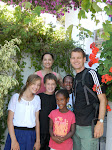
Wednesday, July 13, 2011

Shopping in Albania

(Note: Thank you to those who pointed out that you couldn't click on the photos to enlarge them. I did some research and figured out how to fix that problem in future posts. Let me know if this works.)

One of the most challenging and yet enjoyable things about living in a country for six weeks is having to shop for what one needs from day to day. This can be especially entertaining in Erseka, since this is still a land where English is nearly useless. Perhaps because Albania was completely closed and isolated under communism, most of the people in smaller towns like this know little English, and not even my limited Spanish and German helps a bit. That means we do a lot of smiling, pointing and saying "po" (yes) and "yo" (no) -- and trying not to nod or shake our heads, because those motions are opposite here. A nod actually means "no," which gets me into so much trouble, you couldn't imagine.


Today we ventured to the weekly "market," which is a flee-market-type gathering in the middle of the town. Locals from Erseka and surrounding villages don their best clothes and walk up and down the rows of stalls, purchasing things like used clothing, socks and underwear, fruits and vegetables, pots and pans, a few tools here and there, and pretty much the gamut of Chinese-made knicknacks. Shoes are very expensive in Albania, so many people were rummaging through the piles of used shoes, which local cobblers spiff up and sell for a great deal. Same with clothing. Ruth picked up some used shorts for $2 (she would have gotten them cheaper, I think, but the vendor heard us speaking English). We also bought dish soap, tomatoes and deoderant.  Kind of like an Albanian Walmart, right?

Normally, however, I like to visit the small stores located on every block of this town, often right next to each other.  These stores are very similar to one another, leading me to wonder how they manage to stay in business.  They all carry pretty much the same produce, which is very fresh and yummy but lacks a lot of variety.  Inside the store, you'll find some basic types of frozen meats, milk in boxes, rice, pasta, one or two types of jelly, one kind of cheese and exactly two kinds of cereal -- corn flakes and Coco Puffs.  Ruth showed me where to find a few specialty items, like some tortilla-type things; thick, Greek yogurt that substitutes for sour cream; and boullion cubes to make soup. I have narrowed my shopping down to three stores where the shopkeepers know me as the helpless American and always write down the cost of everything by hand (no cash registers here), so I know how much to pay.

I have great admiration for these shopkeepers, who literally work from dawn until dusk.  They are mostly middle-aged women, but you'll often see their older parents helping out, or their grown sons and daughters, leading me to believe these are truly family-based businesses.  Best of all, the business owners here are reputed for their honesty.  Despite the hard-scrabble life they lead, they earn each "lek" in a clean, respectable way, not even taking advantage of a gullible foreigner like me who takes out a large bill and waits wide-eyed while they count out my change.  Before I go, they pass out a candy to each of my children, kiss me on the cheeks and send me on my way.


Sunday, July 10, 2011

Aaah...the Greek island experience

We have just returned from our four-day trip to the western coast of Albania and the Greek island called Corfu. Let me just start by saying we earned every moment of tropical paradise that I'm about to share with you, because squeezing 11 people into a car built for 8 and then traveling on windy, pot-holed dirt roads is a harrowing experience. Our friend Mark is quite the masterful driver, but the narrow roads and obstacles ranging from sheep and cows in the road to oncoming traffic -- and I do mean ONCOMING!!!! -- makes for a nail-biting journey. (Ever been on the Indiana Jones ride at Disneyland? Yup, that's what I'm talking about.)

Anyway, after 5-6 hours on the road, a tedious border crossing and a 2-hour ferryboat trip, we finally got to experience the lovely Greek island of Corfu. Corfu is one of the Ionian Islands, and because it was once
occupied by Venetians, it looks more like Italy than the southern Greek Isles you've probably seen in pictures. The houses are all shades of Mediterranean colors and the foliage consists of mostly
olive and fig trees punctuated by eye-popping bougainvillea bushes. Even so, the water is that same tropical island blue, and the Greek food is tremendous -- moist, saucy gyros wrapped in warm pita bread, seasoned grilled meats served with tomatoes and olives, and fresh fish of every
kind, including grilled octopus, which looks frightening but is actually buttery, garlicky and melt-in-your-mouth tender.

We stayed at two apartments owned by a local pastor and his wife, Milt (pictured with Jeff below) and Vette. They served us coffee and crema pastries one morning and told
us about their ministry
on Corfu. Their testimonies are especially remarkable when you consider that protestant Christians endure quite a bit of persecution in
Greece, because the state religion is Greek Orthodox. The Orthodox church controls the press there, the police, the schools...you name it.
Makes it hard to reach out to the community, but Milt is a jovial, determined man, and he grinned as he told us about how he manages to circumvent all the trials he faces by combining cleverness with old-fashioned diplomacy.

Corfu has lovely beaches; a picturesque, cliff-side
monastery; and a cramped, colorful "old town," so we soaked in all of these...and we have the sunburns to prove it. Then, for our last night, we ferried back to Albania and spent a night in Saranda -- an Albanian re
sort town, which is not as sophisticated as Corfu but more like a down-to-earth beach town: lots
of street vendors, much cheaper prices and waiters who treat you like royalty.

We returned to Erseka on Saturday feeling relieved that we're not traveling from place to place each day. It is so exhausting navigating new places constantly. That said, it was a treat to see a very different part of this country and soak up some sun and surf to last through the next few weeks in Albania.

Tuesday, July 5, 2011

Celebrating the 4th


Yesterday was the 4th of July -- which may seem obvious to all of you, but is easy to ignore here in Erseka, Albania. We put our heads together with the Stoschers, who haven't ever celebrated Independence Day in the 20 years they've lived here, and came up with a barbecue with all the American fixings: hamburgersand hotdogs (morelike sausages, actually), grilled on Mark's outdoor wood-burning stove; potato salad, watermelon, deviled eggs, and Ruth's excellent apple and pumpkin pies. We invited all the Americans we knew in town, including our friend Natalie and her fellow camp counselors Jackie and Josh from Oregon (brother and sister), and Eric and Cathy Gundy, who are missionaries from Chicago. We gathered before the meal to sing the national anthem -- corny, I know, but a fitting tribute to our common heritage. Natalie and Jackie had found some fireworks at a local store, but they ended up launching those at the camp, so we didn't see them. All in all, a wonderful evening.

Over the last couple of days, our family has accomplished a couple of mini-mission-projects for the church and camp. We move
d large pieces of rock to an area around the camp pool, to form a small "deck" wh
ere kids can walk to and from the pool without getting their feet full of dirt and sand. Then today, we helped Mark and his kids complete a small climbing wall at the church. It was satisfying work
to drill, hammer and select the right handholds and footholds -- and then of course to have our small "focus group" of kids test it out.

Unfortunately, Jeff smashed his finger badly while removing an old basketball backboard that we were going to replace. Mark rushed him to the hospital to determine if he needed stitches, which he didn't. But the
doctor suggested a series of tetanus shots just to be safe. So Jeff got four large shots in the rear and arms, administered by a person he described as "the nurse who stepped straight out of communism." By this, I believe he means she was large, stern and no-nonsense. Anyw
ay, Jeff was quite a trooper about his injury, and continued working all day with his bandaged finger and sore bumm.
Tomorrow, we head to Greece and the east coast of Albania for a few days of sun and swim. The Stoshers are accompanying us, so we'll be squeezing 11 people in a Toyota Land Cruiser built for 8. (Don't worry, Mark says he has fit more than that many times.) I'll fill you in more when we return next weekend!

Saturday, July 2, 2011

On trash and stray dogs


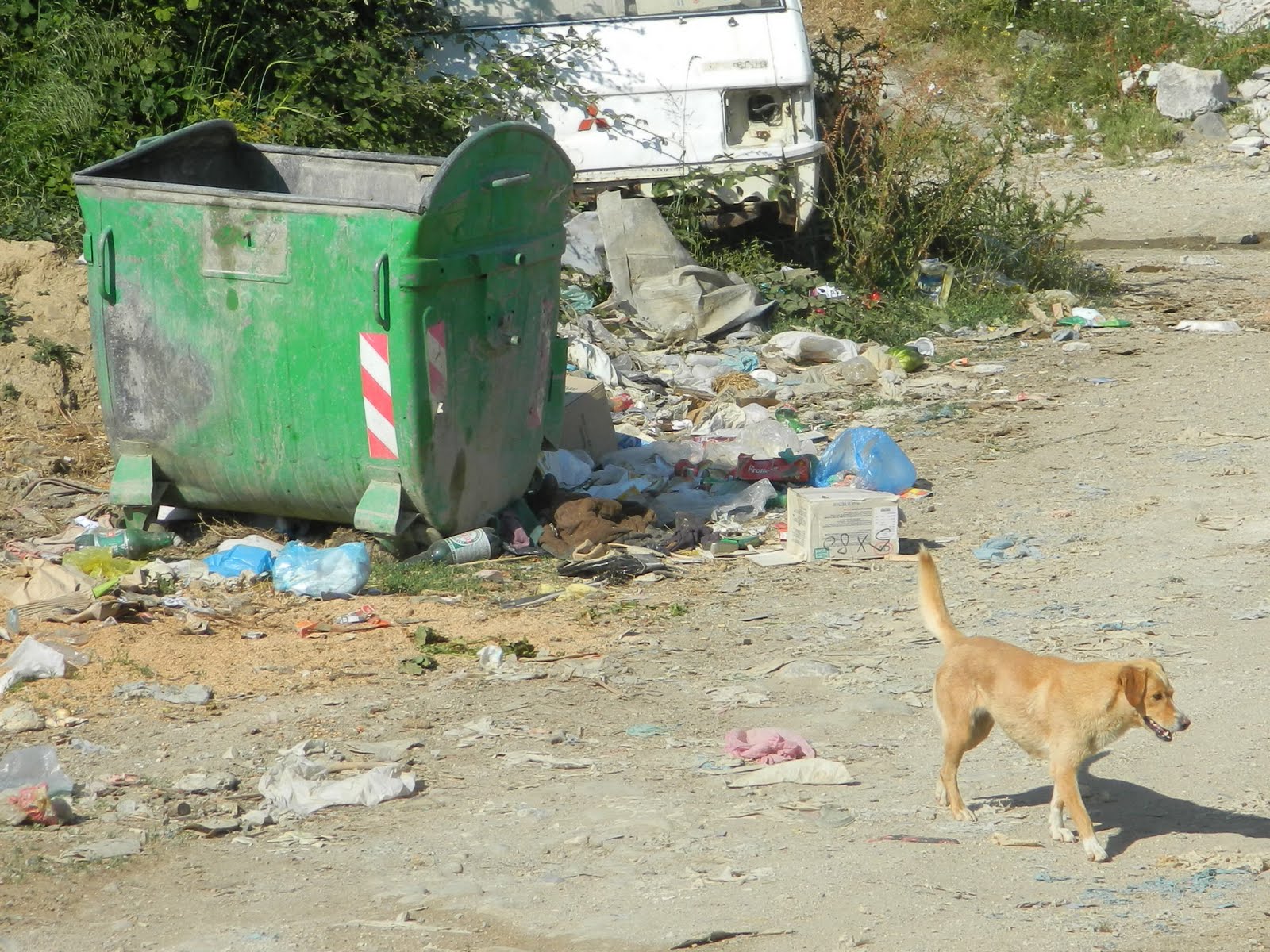
Since I've spent plenty of time reflecting on all the wonderful things about Albanian life, I feel liberated to comment on two things that have been hard for us to see: an overflowing amount of garbage on the streets, and a large community of scraggly, mutty, stray dogs. And these two things, as you can imagine, are often related.

From what I've gathered, people deal with trash in one of three ways. They throw it in the dumpsters conveniently located on every block, usually right next to the sidewalk. From here, the stray dogs and cats jump into the bins and drag the trash out to search for food. Thus, trash everywhere. Or, people throw their trash next to their house in a pile, and then set the pile on fire now and then to get rid of it. Thus, lots of nasty smoke. Or, third, they simply litter as they are walking or driving from place to place. Thus...oh, you get it. It's a dirty, nasty mess wherever you look.

Jeff said he thinks it would be hard to change the attitudes of an entire community, who has always lived this way. But I'm an optimist in this area. I think if you could change the minds of the children and young people -- maybe even get them involved in picking up their community -- they could eventually convince the older people to follow suit. In a sense, like my generation learned about the dangers of smoking and then nagged our parents endlessly until they quit. Maybe those of you who've seen this problem repeated all over the world, in truly every economically depressed community, think I'm a bit starry-eyed. I just hate to see this lovely town looking like a garbage dump.

And as for the dogs, let me just say that in Albania you'd be much better off as a donkey, sheep or pig than a dog. Yes, there are a few working dogs -- guard dogs or sheep dogs -- that probably get fed regularly. But they are mean, vicious creatures who snarl and bark every time you get near. And the rest of the sorry breed are scattered around the town digging through trash dumps and cowering when any humans walk by. That's because they've been struck regularly by rocks that locals throw at them. (Deep breaths, you of the dog-loving nature. I know this is shocking.)

A few days ago, we were having a lovely walk through a neighboring village, all Europe-ey looking with cobblestone streets and roses pouring over stone walls. And suddenly, we saw a man rush out of his business, pick up a handful of stones and begin pelting a tiny puppy, who was innocently rolling in the street and playing with his sibling. The dog ran away yelping, and I thought Isabel was going to attack this hearty villager with her bare fingernails. Thankfully, we stopped her in time. Not our place -- especially when our Albanian verbage consists of "good morning," "good evening," and "thank you." When we described the scene to Mark later, he said it's very hard to change these mindsets. To the Albanians, stray animals are a dirty menace.

So maybe it's best to dedicate this post to my beloved yellow lab, Tawnie, and remind her that she has a pretty good life. No chicken bones to gnaw or sardine tins to lick, but lots and lots of love.

Friday, July 1, 2011

A trip to the "big city"

The nearest big city to Erseke is
Korce. Korce is a community of about 80,000 an hour's drive northeast, on the same windy roads we took to get here. Mark, Ruth and Beka invited us to come with them to Korce on Wednesday, since they had to pick up a few items there. As we learned, when one plans a trip to Korce, all friends, neighbors and colleagues feel free to put in their orders for things they need. (I find this a pleasant picture of small town life -- everyone kind of depends on one another to get what they need.) So Mark spent much of his day locating and purchasing things like basketballs for the camp, a replacement wheelchair wheel for a church member and staplers -- which we never actually found. No staplers in this part of the world, I guess.

We ate a wonderful lunch of chicken cooked on a spit and served with halved lemons, french fries, salad, bread and plentiful tzatziki dressing (the Greek, cucumber and sour cream dressing you eat on gyros). You can sense our enjoyment in the photo above, right?

But even more memorable than the lunch was our tour of the Evangelical Church of Korca (also called the Kenedi Foundation after the missionary who founded it). This church has launched
some fantastic ministries to serve the people of this area. We saw their medical clinic, where our tour guide Marlene (a warm, energetic Belgian woman pictured at right) is one of the nurses providing basic medical services for a very nominal cost. While we were there, a mother and her three little girls from Erseke arrived to receive care for second degree burns they had acquired making jam with wild figs. (I know, this sounds weird. Even Marlene had never heard of such a thing, but it's true. The fig juice reacted to their skin and burned them!) The family (in photo at right) had spent 10 days in the hospital, but the hospital was not very knowledgable about caring for the burns after initial treatment, so the doctor had referred them to the church clinic. Marlene said when they first came to the clinic days before, their bandages were so stiff she had to soak them with water to remove them. Apparently, this is the wrong way to treat burns, letting everything get dry and stiff. The skin must be kept soft and moist to regenerate. So Marlene had been applying medicine daily and rebandaging their wounds, while offering a healthy dose of love and good humor.

Marlene next showed us a group home next to the church where girls rescued from dangerous
or abusive living situations can find safe haven. The seven girls
live as a family with a house mom, and when they mature are given help finding a place to live and a job. We got to interact a bit with a few of the residents, so I took their pictures. They were lovely young girls. (Marlene says child abuse is quite common in Albania, and she suspects sexual abuse is also quite a problem, although no one will talk about it, including the victims.)

The church also provides daily lunches to a group of street children in an off-site location. And they deliver meals to dozens of elderly people who don't have family to tend to them. (Most older people in Albania live with one of their children -- usually the youngest son, I'm told.) The church is now building the city's first assisted living facility, where these older people can live safely. The entire visit to this church was very impressive and also humbling, when one considers that the church is likely pouring more of its resources into serving the community than its own members.

Our last stop in Korce was the grocery store, where we grabbed a few items we cannot find in Erseke: raspberry jam, chamomille and green tea, broccoli and honey. Funny the things you come to miss, or in some cases not miss at all, when you're traveling. Number-one on my list, in case you're wondering, is my pillow. And my dog. And all of you, of course...oh, don't get me started....

Tonight we go back to the camp to celebrate the campers' last night with skits, singing and a slide show. We're really looking forward to having Godebo and Noel back here with us, although it has been strangely peaceful without their boisterous energy!

Wednesday, June 29, 2011

A typical Albanian visit


We have sampled a few Albanian restaurant meals since we arrived. The food here is really terrific. Even the camp food makes our mouths water.

One day we tried byrek (pronounced boo-wreck), which is considered one of the area specialties. It's like a quesadilla, but with soft phyllo-type dough instead of tortillas and fillings like white beans or a strong-tasting feta cheese mixed with sauteed leek. They are only sold until mid-morning, so you have to hustle if you want byrek around here!

Two nights ago, we took our friend Mark for pizza at the local pizzaria. I had to laugh, because no one around here can tell you what the topping choices are, except for "some kind of meat" and "cheese" and "all sorts of vegetables." We Americans are used to a million-and-one choices, aren't we? Here, you just order a pizza with everything. It was really yummy, especially with a cold "Tirana" beer.

However, the true highlight of the evening came when a friend of Mark's named Jamal sat down to chat. Jamal is a charming older gentleman with a plaid cap, a cane and a definite twinkle in his eye. Mark explained that Jamal was actually one of Albania's most famous and celebrated folk singers in his day. I tried to get him to sing for us, but he said his heart was not so strong now, so he no longer sings. Jamal eventually invited us to his apartment, and after Mark told us this was a good opportunity to experience a typical Albanian visit, we accepted the invitation. In the end, we were very glad to have Mark along, because there are apparently some guidelines to a visit like this:

* Everyone who enters an Albanian home on a visit receives a drink. Typically this is an Albanian liquor, similar to a brandy. But Jamal's daughter-in-law (Lela), not the least phased by us dropping by unexpected, served us a fruit juice. Albanians do not ask if you want a drink or what kind of drink you want; they simply serve you.
* When you get your drink, you hold onto it until everyone is served. Then the host, Jamal in this case, raises his glass for a toast. The toast sounds something like "gah-rote," and we also repeated this when we were offered a chocolate, which one also must accept so as not to be rude.
* Here's another interesting thing: The guest doesn't necessarily have to drink more than a sip or eat more than a bite, as long as he/she goes through the motions. It is not considered rude to leave most of the food behind. Bereket made the mistake of finishing her juice first and had her glass refilled immediately, which she again felt obligated to drink. The rest of us learned to sip slowly!
* When the host offers coffee, the guest can accept or decline. But once coffee is offered, the guest has the green light to leave whenever he/she must. We declined coffee in this case and soon departed, but not before we took a photo with Jamal and Lela (above). They were such delightful people, and we appreciated having our first visit to an Albanian home be so warm and pleasant.

When I relayed this story to Joe, the Peace Corp worker who lives below us, he told me that, unlike Americans, Albanians have never lost the art of conversation. These types of visits and interactions with their friends (and even strangers), is what drives their day. They are never inconvenienced by a visit, nor too busy to stop and make conversation in the midst of their days. That's certainly a skill I'd like to develop as I live like an Albanian for a few more weeks.

Monday, June 27, 2011

Camp in Albania

It's the first week of camp here in Erseke, so I'm including some photos of our kids taking part in the fun. Godebo (pictured with his personal translator, Steven Stoscher) and Noel (participating in a sack race) are sleeping at the camp all week. Thankfully, they are in the same room, along with Steven and Jamie Stoscher and two other boys who speak fluent English. Even so, a lot of the time, they must sit back and listen to Albanian being spoken, so it's not an easy undertaking. I'm proud of them for being so brave to give this experience a try.

Jeff, Bereket, Isabel and I walked over to camp at lunch time today to see if we could lend a hand. Unfortunately for us, the camp is pretty well staffed, so there wasn't much for us to do. Isabel helped a bit with crafts (photo below), Bereket enjoyed the climbing wall and some other activities, and I dried some dishes for about an hour, but the rest of the time we just did a lot of watching and chatting with people, or playing volleyball and basketball with the campers and counselors. It's very weird not to have a lick of responsibility here. Quite frankly, we're deadly bored a lot of the time. But that's just how it goes when you show up someplace without an established role. It gives us flexibility to come and go as we please, but it means we're twiddling our thumbs a lot of the time. Jeff tells me this is part of "detox" from our busyness at home -- in other words, it feels very uncomfortable, even painful, but it's really a good thing for us. I can buy that, I guess, but the truth is that I feel more lonely and homesick when I'm not busy, so it makes this long vacation much harder in some ways.

Oh -- for those from Sacramento, I included a photo of Natalie, who is being such a trooper at camp, but is also feeling somewhat lonely and bored at times. She's a bit amazed by the lack of organization here; the schedule is loosely organized, but there's a lot of running around or waiting around -- not at all like Westminster Woods. Here she's pictured with two of her co-counselors, Mary from Kosovo, a delightful and joyful 16-year-old who came to faith in the midst of great personal tragedy during the war there; and Anna, a serious but pleasant German college student who was in Albania for the Torchbearers Bible School and decided to stay for the summer.